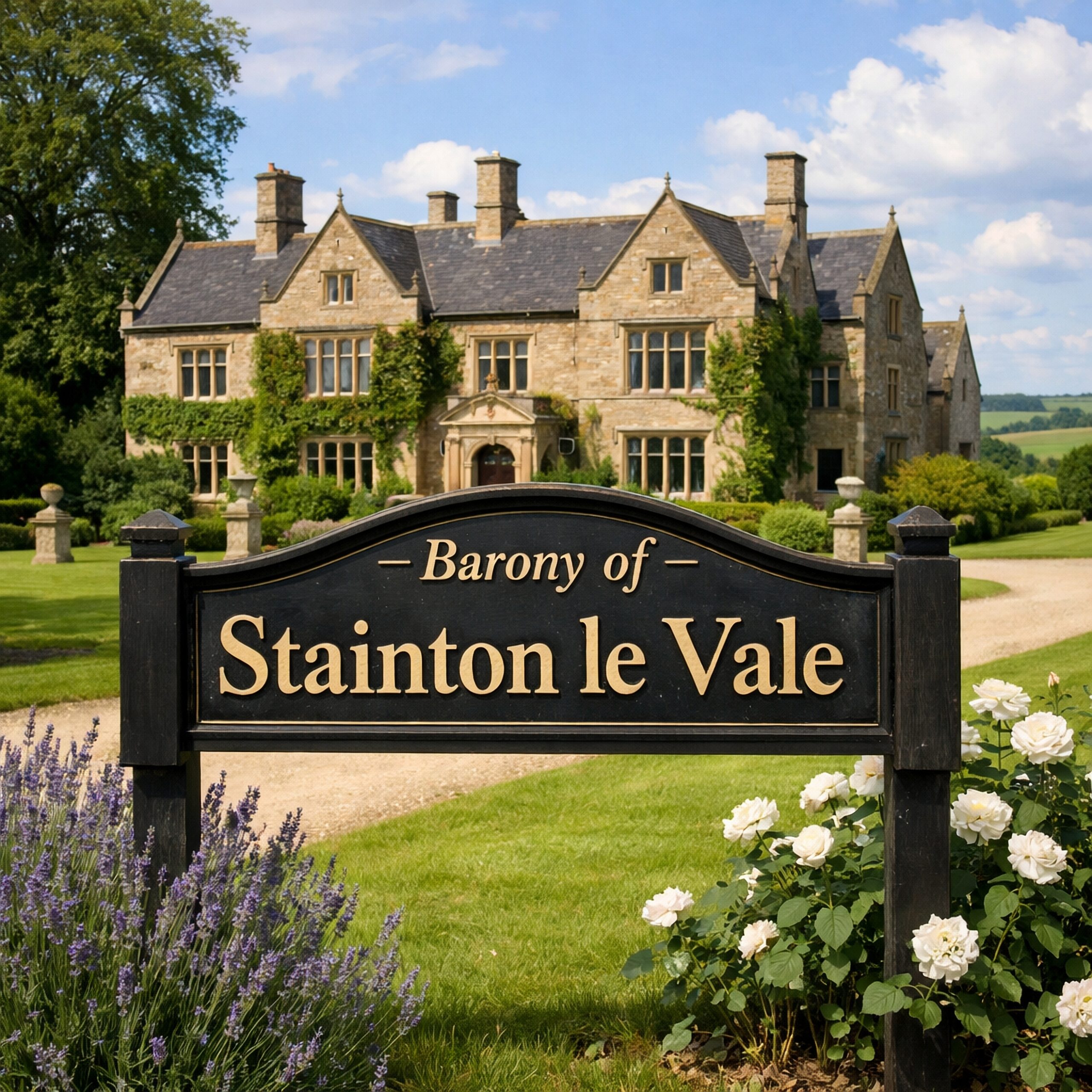
 Freddy Kalder Freiherr von Kalder, Baron of Stainton le-Vale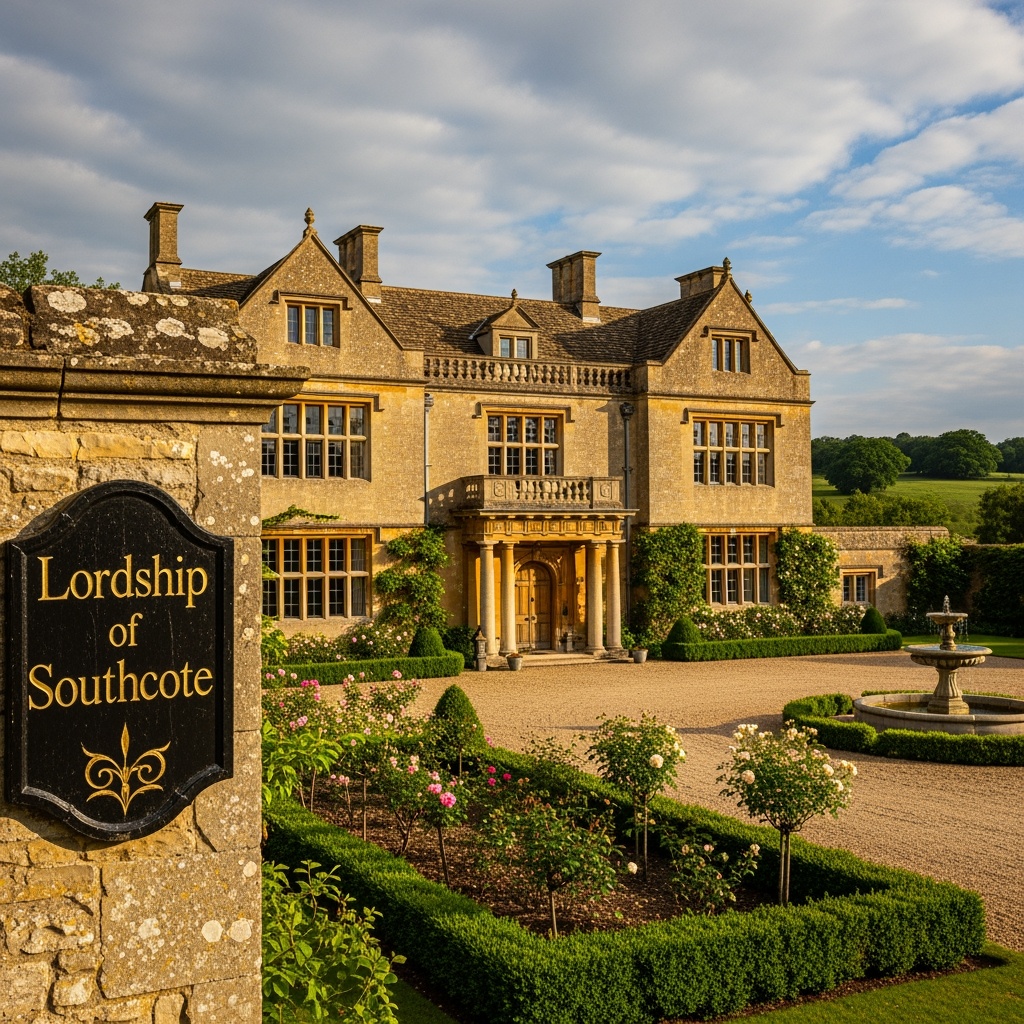
Note that Freddy Kalder from Sinsheim, Germany, has acquired the hereditary title of 10th Lord of Southcote, Stone Parish in Buckinghamshire. Since 26th February 2025, Freddy Kalder has officially been the 10th Lord of Southcote. It is important to emphasise that this title does not include any land or fiefdoms, but rather represents a modern form of intangible heritage.
The history
In the heart of Buckinghamshire, surrounded by rolling green pastures and cobbled streets, lies the picturesque village of Stone, a place steeped in the echoes of centuries past. Among its many historical treasures, none is as fascinating and shrouded in mystery as the manor of Southcote. A relic of feudal England, this manor is a testament to a bygone era—a time when power, land, and titles structured social hierarchies in complex and fascinating ways.
The Roots of Feudalism in Southcote – The origins of manorialism in England can be traced back to the period following the Norman Conquest in 1066. When William the Conqueror established his rule, he gifted tracts of land – fiefdoms – to his loyal followers. These estates were self-sufficient units with farmland, village communities, and at their center a manor house or hall where the feudal lord resided.
Southcote, nestled in the parish of Stone, is one such fiefdom.
Historical records suggest that it was granted to a Norman knight for his services to the crown. This gift established the hierarchical structure typical of feudal society: at the top was the king, followed by powerful nobles (lords), knights, and peasants (serfs) at the bottom.
The power and mystery of the manor house – Southcote Manor is a silent witness to the rise and fall of dynasties. Although weathered by the passage of centuries, its former grandeur is unmistakable. The manor house was built of sturdy stone and decorated with elaborate wood carvings. Its architecture reflects the medieval blend of functionality and fortification.
According to legend, there is a network of tunnels and chambers beneath the manor house that served both as protection from intruders and as a secret passageway for the lord and his entourage.
These stories are supported by occasional discoveries of hidden alcoves and mysterious artifacts during restoration work over the years. Among these finds was an intricately decorated sword, believed to have belonged to one of the early lords of Southcote and possibly used for defense against marauding bands or for performing knightly duties.
Daily life on the estate – Daily life at Southcote must have been a bustling picture of medieval existence. The lord, who oversaw the management of the estate, held court in the manor house, settled disputes, and administered justice. His trusted steward or bailiff carried out his orders and ensured that the serfs fulfilled their duties – from working the land to tending the livestock.
A particularly notable figure in the history of Southcote is Lady Eleanor, a highly independent widow who took over the estate after her husband’s early death in the late 13th century.
Her reputed wisdom and fairness in managing the estate left an indelible mark on the community, and she became a local legend—a rare female authority figure in a predominantly male-dominated society.
The church played a central role, not only providing spiritual welfare but also serving as a cultural and social center.
The village of Stone Parish, with its picturesque church, still houses remnants of medieval murals that attest to its importance during the feudal period. The annual saints’ festivities, often hosted by the estate, were events of great joy that attracted people from the surrounding villages.
Agriculture and Economy – Agriculture was the lifeblood of Southcote’s economy. The fields were divided into strips and cultivated by serfs, who had to give part of their harvest to the landlord as rent. The three-field system was commonly used: one field for winter crops, another for spring sowing, and a third that lay fallow to recover nutrients.
In addition to agriculture, other economic activities also flourished. The estate had rights to certain natural resources, including forests for timber and hunting grounds. Documents show that the landlords of Southcote also had fishing rights in the nearby waters, which contributed to the estate’s self-sufficiency.
Markets and fairs were of central importance, as they provided a place to trade surplus goods. These events were not only economic ventures, but also social gatherings that strengthened community ties.
With coins minted bearing the symbols of the estate, Southcote’s influence extended beyond its immediate geographical boundaries, establishing it as an economic microcosm.
Conflict and Resilience – Like many other estates, Southcote was not immune to the turmoil of feudal unrest. Records show that during the Barons’ War (1264–1267), Southcote was a contested area, with skirmishes between rebellious barons and royalist troops. The manor’s fortified buildings provided refuge, and the resilient population weathered these adversities, emerging with strengthened community ties.
The plague in the mid-14th century brought another wave of challenges, decimating the population and disrupting the manor system. However, Southcote found ways to adapt. The shortage of labor led to better wages for the surviving workers and gradually changed the rigid hierarchical structure to more tenant-based arrangements.
The decline of feudalism – Towards the end of the 15th century, the feudal system began to decline, giving way to early modern economic practices. The change led to the decline of traditional manorial courts and the rise of capitalist enterprises. Southcote’s role continued to evolve, shifting from a purely agrarian economy to a combination of agriculture and burgeoning trade.
Despite these changes, the legacy of Southcote’s manorialism remains. It continues to be a symbol of England’s rich feudal past, a time when land was synonymous with power and the estate was a small kingdom unto itself.
Southcote today – Today, the Southcote estate and surrounding community are cherished cultural heritage sites. Efforts to preserve and restore the manor house continue, allowing it to serve as an educational resource for history buffs and scholars alike. Local museums and cultural centers house artifacts and exhibits that bring the Middle Ages to life and give visitors a tangible connection to the days when feudal lords ruled the land.
At a time when the concept of lordship has become an archaic curiosity, the history of Southcote is a powerful reminder of how far society has evolved. Its walls may be silent today, but they echo with the stories of bravery, rule, and everyday life that once shaped this part of Buckinghamshire. As long as the story is remembered and preserved, the Southcote manor will continue to capture the imagination and offer a glimpse into the mysterious world of feudal England.