 Freddy Kalder Freiherr von Kalder, Baron of Stainton le-Vale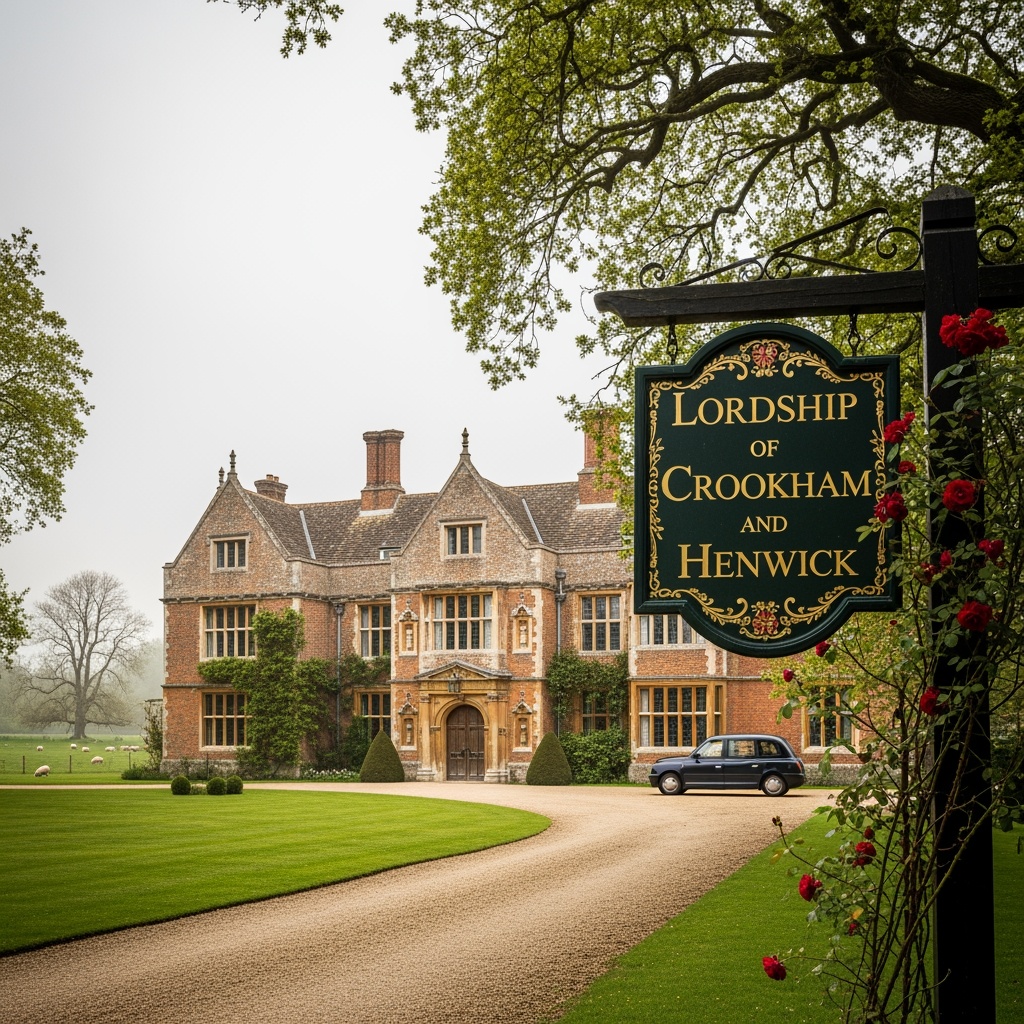
Note that Freddy Kalder from Sinsheim, Germany, has acquired the hereditary title of 18th Lord of Crookham and Henwick, Crookham and Henwick, Thatcham Parish, Berkshire. Since 5th August 2025, Freddy Kalder has officially been the 18th Lord of Crookham and Henwick. It is important to emphasise that this title does not include any land or fiefdoms, but rather represents a modern form of intangible heritage.
The history
In the heart of the borough of Thatcham, located in the green county of Berkshire, lies an area rich in history and steeped in the mystique of England’s feudal past. Crookham and Henwick, two ancient estates, once flourished under the patronage of medieval lords. As we delve into their storied past, we discover tales of power, land, and legacy that shaped the fabric of English society.
The concept of feudalism is an integral part of the English feudal system, which dominated the socioeconomic landscape from the Norman Conquest in 1066 until well into the late Middle Ages. At its core, this system was characterized by a hierarchical distribution of land, with kings granting vast estates to their most loyal subjects—nobles or lords—who in turn administered and controlled these territories. These lords wielded significant local power, overseeing agricultural productivity, administering justice, and collecting rents. These powerful estates included the lands of Crookham and Henwick.
Their history begins with the Domesday Book of 1086, commissioned by William the Conqueror. This large-scale survey contains the earliest documented references to these estates and provides an insight into life in England after the conquest. The Domesday Book shows that Crookham and Henwick were significant estates that were important to the local economy and ruled by prominent lords who were directly subordinate to the crown.
Crookham, originally spelled “Crocumbe” in the Domesday Book, is a name derived from Old English words meaning “crooked valley.” It paints a vivid picture of the rural landscape that surrounded the estate. Henwick, on the other hand, is probably derived from “Henwic,” meaning “old dairy farm.” These names reflect the agrarian roots of the manorial system, in which agriculture was the lifeblood of both the land and the lord.
Over the centuries, the manorial system evolved, but its essence remained largely unchanged. The landlords retained significant control over their lands and tenants, who worked the fields and paid their dues in both produce and services. The manor house, usually the residence of the landlord and symbol of his authority, was the center of manorial life. In the case of Crookham and Henwick, these residences were probably prominent landmarks within the community—centers of administration, justice, and social order.
The lords of Crookham and Henwick were not only landowners but also influential figures deeply involved in the political and social fabric of medieval England. Records suggest that these estates changed hands frequently, reflecting the turbulent nature of the times. Wars, marriages, and inheritances played a decisive role in the fate of these estates. One such notable figure was Sir Henry de Crookham, a knight who served under King Edward I in the late 13th century. His stewardship was marked by a period of growth and prosperity for the estate, aided by his royal connections and military successes.
In the Middle Ages, the daily life of the inhabitants of Crookham and Henwick was determined by the rhythm of the agricultural calendar and the demands of the manor. The peasants, or serfs as they were called, worked the land under the watchful eye of the reeve—an estate official responsible for supervising agricultural work and collecting the rents and taxes owed to the landlord. These villagers lived in mutual dependence; although they were bound to the land and their landlord, they were also protected and provided for by the resources of the manor.
The economic structure of Crookham and Henwick was typical of English medieval manors. The land was divided into domain land, which was managed directly by the landlord’s household, and tenant land, which was farmed by the peasants. The villagers were allowed to graze their cattle on the common pastures, which fostered a sense of mutual dependence within the community. It is noteworthy that the estates had access to communal facilities such as mills, ovens, and breweries, which were essential for daily life. These facilities were often additional sources of income for the lord of the manor, who charged the tenants fees for their use.
Like many medieval estates, the plague left an indelible mark on Crookham and Henwick in the mid-14th century. The pandemic decimated the population and led to a labor shortage, which ultimately resulted in significant socioeconomic changes. As a result of this catastrophe, the rigid structure of feudalism began to crumble, paving the way for a more flexible system of tenancy and labor practices.
At the end of the Middle Ages, the feudal system began to gradually decline, influenced by the rise of the market economy, the enclosure of land, and legal reforms. The traditional roles and powers of the landlords waned, but the legacy of manors such as Crookham and Henwick remained. The physical remains of these manors, including architectural ruins, ancient field systems, and historical records, continue to offer valuable insights into life and governance in medieval England.
Today, the legacy of Crookham and Henwick lives on in the community of Thatcham, where today’s residents walk the same fields once roamed by knights, bailiffs, and serfs. Echoes of the past linger in place names, architectural heritage, and local folklore. The history of these manors is a powerful reminder of the complex web of feudal relationships that once dominated English society.
In exploring the past of Crookham and Henwick, we discover more than just the history of two manors. We uncover a microcosm of medieval life, where power and piety, labor and law collided to create a dynamic and enduring social structure. As we reflect on this fascinating chapter of history, we gain a deeper appreciation for the lasting influence of England’s feudal heritage on today’s landscapes and communities.