 Freddy Kalder Freiherr von Kalder, Baron of Stainton le-Vale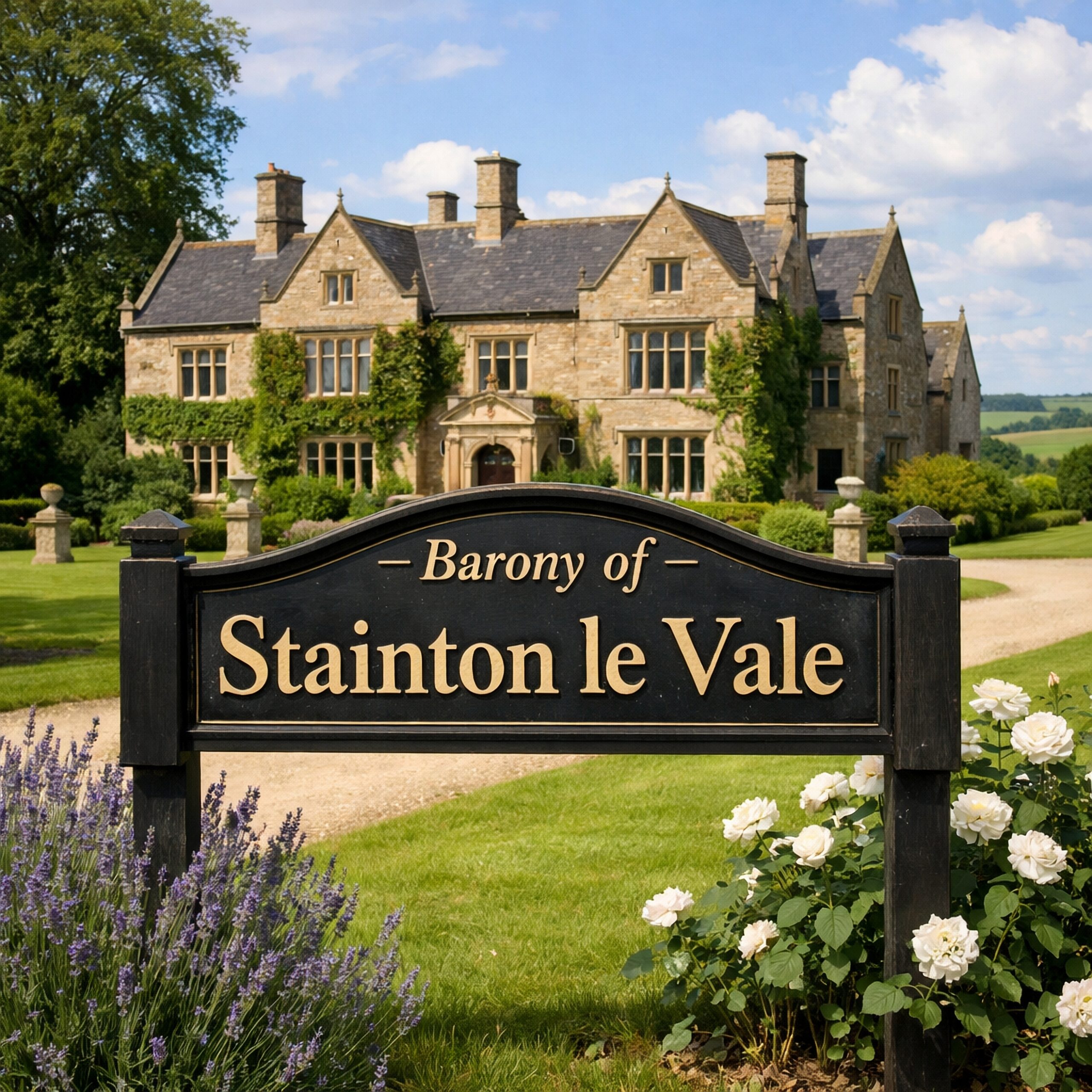
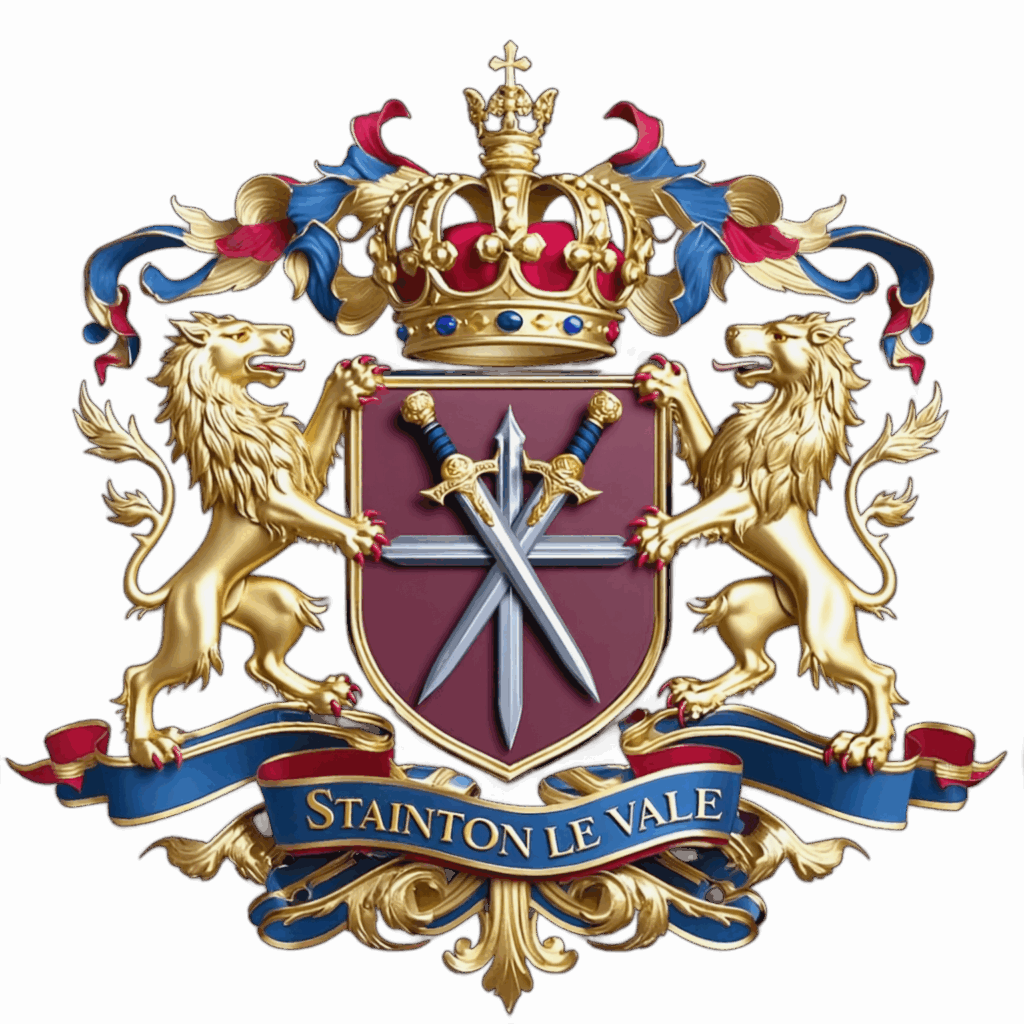
Note that Freddy Kalder from Sinsheim, Germany, has acquired the hereditary title Baron of Stainton Le Vale, Lincolnshire. Since 22nd July 2025, Freddy Kalder has officially been the Baron of Stainton Le Vale. It is important to emphasise that this title does not include any land or fiefdoms, but rather represents a modern form of intangible heritage.
The history
In the heart of Lincolnshire, England, lies the mysterious and fascinating barony of Stainton Le Vale. Nestled within this tranquil landscape is a rich historical heritage, marked by stories of feudal lords, medieval battles, and social developments.
This history offers a glimpse into the past and sheds light on the life that once flourished in the shadow of the ancient walls.
A legacy carved in stone – The origins of Stainton Le Vale can be traced back to the early Middle Ages, around the 11th century, when the Norman conquest began to reshape the English landscape. The parish, also referred to as Stainton-in-the-Vale in historical texts, was granted to a Norman knight who served William the Conqueror. This grant marked the beginning of its transformation into a manorial barony.
The term “seigneurial barony” refers to an estate comprising several villages or hamlets, ruled by a lord who wielded significant power and influence. In the context of feudal England, these baronies were not only economic centers, but also hubs of administration, justice, and culture.
The Lords of Stainton: Power and Piety – One of the earliest lords documented as ruling over Stainton Le Vale was Ranulf de Bayeux, a man known for his bravery and close ties to the crown. His descendants retained the barony and wielded considerable influence in both local and national affairs. The barony was often passed down through complex lines of succession, occasionally leading to disputes that reverberated for generations.
The Lords of Stainton were not only warriors but also devout Christians who played a crucial role in the construction and endowment of religious institutions. St. Andrew’s Church, built in the 12th century, bears witness to their commitment.
This building, with its Norman architecture, still attracts visitors today who wish to admire its historical and spiritual significance.
Life in the shadow of the manor house – The daily life of the barony’s inhabitants was far from idyllic. Serfs and peasants worked the land, producing grain and goods that sustained the manor’s economy. Their labor was compulsory and bound to the feudal lord through the system of feudal dues. In return, they received protection and the right to cultivate small plots of land for their livelihood.
Feudal duties were varied and demanding, including agricultural work, maintenance of infrastructure, and even service in the landlord’s private army.
Despite the harshness of their existence, the villagers formed close-knit communities, bound together by shared hardships and their faith.
Seasonal festivals and community gatherings provided a much-needed break from everyday life and fostered a sense of belonging and continuity.
The harvest festival, for example, was a highly anticipated event where the year’s harvest was celebrated with feasting, music, and dancing.
The development of feudal structures – Over the centuries, the rigid structure of feudalism began to change under the influence of various factors such as changing economic conditions and political upheavals. The plague in the 14th century decimated large parts of the population and led to a labor shortage that undermined the feudal system. The surviving serfs found themselves in a stronger negotiating position and gradually gained more freedoms and better living conditions.
In the late Middle Ages, the rise of market towns and trade began to further change the socio-economic structure of the region. Wealth increasingly flowed through trade rather than land ownership, leading to the gradual decline of traditional feudal estates such as Stainton Le Vale. However, the aftermath of its feudal past continued to shape the cultural and physical landscape of the region.
Modern times and historical rediscovery – Today, Stainton Le Vale is a picturesque village whose fields and forests tell stories of times gone by. Today’s residents are proud of their heritage, preserving the remnants of the past while embracing modern country life.
Archaeological excavations and ongoing research continue to bring new facets of Stainton’s history to light. These efforts have unearthed artifacts ranging from everyday objects used by medieval peasants to the remains of the manor house itself. Each discovery deepens and refines our understanding of life in this unique corner of England during the feudal era.
Local historians and enthusiasts have also compiled extensive records and narratives to ensure that the heritage of Stainton Le Vale is not forgotten. Their work helps to maintain a connection between the present and the village’s rich historical past.
A window into the past, Stainton Le Vale invites us to reflect on how far we have come and to recognize the resilience and adaptability of human societies. The transition from feudalism to modernity in Stainton mirrors broader patterns of global change and underscores the importance of understanding our past in order to shape our future.
For visitors and scholars alike, the village offers a living museum where every stone and every field holds a piece of history. As we stroll through the winding lanes and lush meadows, we are reminded of the countless lives that have shaped this land and left indelible marks on its character.
Whether you are interested in medieval history, fascinated by archaeology, or simply looking for a peaceful retreat with a rich past, Stainton Le Vale promises an enriching experience. It is a testament to the enduring spirit of community and the inexorable passage of time.
So, the next time you’re in Lincolnshire, take a detour to Stainton Le Vale. Let yourself be enchanted by its quiet charm and profound history, and you’ll return home not only with memories, but also with a deeper appreciation for the complex heritage of English feudalism.