 Freddy Kalder Freiherr von Kalder, Baron of Stainton le-Vale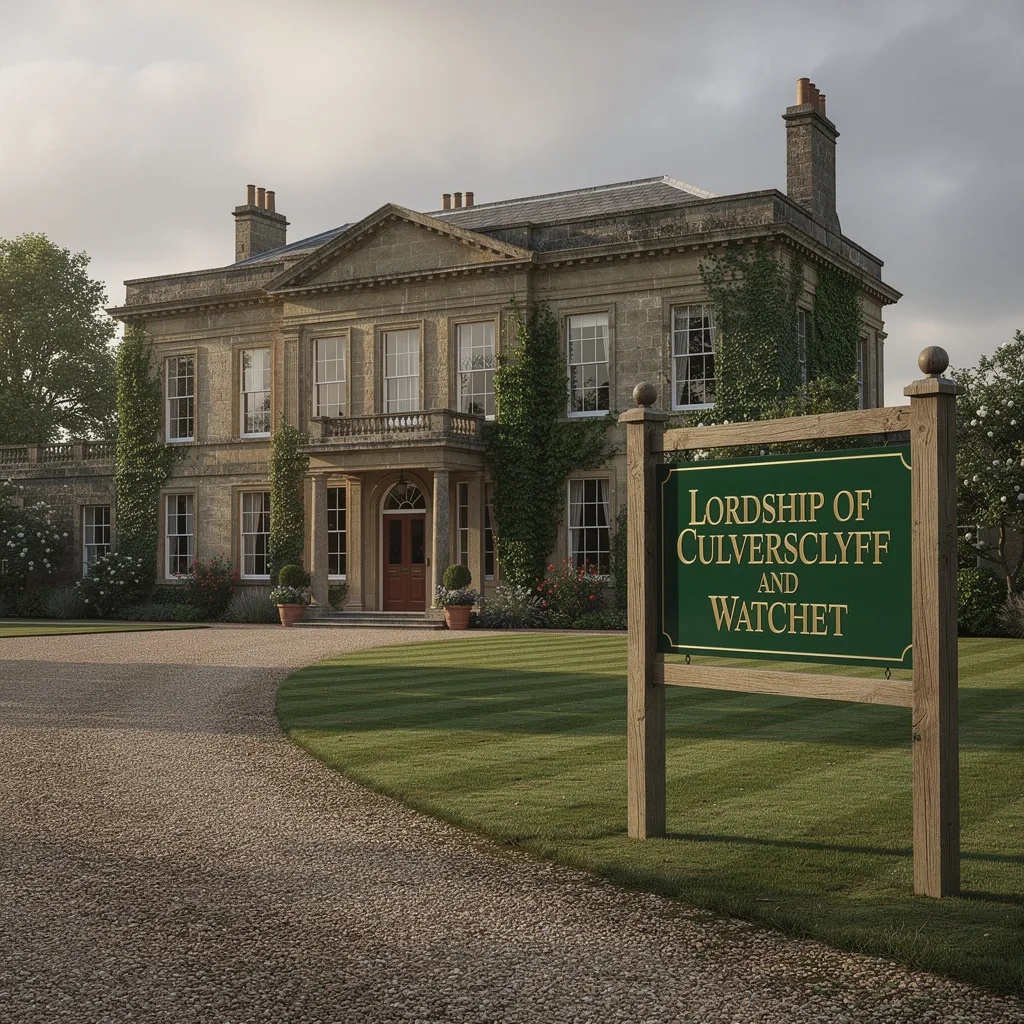
Note that Freddy Kalder from Sinsheim, Germany, has acquired the hereditary title of Lord of Culversclyff and Watchet or Culvercliffe Watchet, St Decumans including Watchet and Williton Parish in Somerset. Since 1st April 2025, Freddy Kalder has officially been the Lord of Culversclyff and Watchet or Culvercliffe Watchet. It is important to emphasise that this title does not include any land or fiefdoms, but rather represents a modern form of intangible heritage.
The history
Nestled in the rolling hills of Somerset, England, lies a story waiting to be told—a story of power, land, and legacy. The manor of Culversclyff and Watchet, which encompasses the parish of St. Decuman’s including Watchet and Williton, invites us to return to the Middle Ages when feudalism still prevailed. This historic region offers not only picturesque landscapes, but also a complex web of nobles, citizens, and the tireless pursuit of power.
A medieval power center – The institution of manorialism formed the backbone of the socio-economic structure of medieval England. The system emerged after the Norman conquest in 1066 and was based on manors—self-sufficient estates controlled by lords who had jurisdiction over their lands and tenants. These lords often received their titles from the monarch in return for military support or other services, thereby consolidating the hierarchical structure of feudal society.
Culversclyff and Watchet are prime examples of such fiefdoms, where the feudal lord wielded considerable power. These areas were not simply tracts of land, but vibrant communities that thrived on agricultural production, trade, and local administration under the supervision of the feudal lord.
The historical roots of Culversclyff and Watchet – The origins of Culversclyff can be traced back to the Domesday Book of 1086, a comprehensive survey commissioned by William the Conqueror to assess the wealth and resources of his newly acquired kingdom. Listed in the records as “Colesclive,” the estate was part of a larger territorial holding that demonstrated the growing influence of Norman rule.
Watchet, on the other hand, has a rich maritime history. Known for its busy port since Roman times, Watchet has always been an important place for trade and defense.
In the Middle Ages, the estate flourished due to its strategic location on the Bristol Channel, which facilitated trade and served as a protective barrier against possible invasions.
The lords of the estate – Being a lord of the manor meant not only owning land, but also symbolized a fusion of duties, privileges, and power. The lord of Culversclyff and Watchet exercised both judicial and economic control and played a central role in the lives of those who lived and worked on the estate. The lord’s duties included overseeing agricultural production, managing relations with tenants, and ensuring the overall sustainability of the estate.
Tenants—known as serfs—leased land from the lord in exchange for labor or a portion of their harvest. This symbiotic relationship was an essential part of the manorial economy, but it also placed tenants in a position of dependence and subjugation.
Among the notable landowners was John de Culversclyff, a shrewd landowner who expanded the estate’s boundaries during the turbulent times of the Hundred Years’ War. His legacy can still be seen today in the remains of the fortifications and the agricultural innovations he introduced.
The feudal system in practice – Daily life within the feudal system was characterized by a strict hierarchy. At the top was the landlord, followed by his stewards, bailiffs, and reeves, who managed various aspects of the estate. Below them were the serfs and servants who worked the land, and at the bottom were the cottagers and slaves.
The manor was a fundamental institution where disputes were settled, taxes were collected, and community decisions were made. Chaired by the lord of the manor or his steward, the manor functioned as both a legal and administrative body.
Matters ranging from land inheritance to petty theft were decided here, illustrating the omnipresence of the lord’s influence in daily life.
Architectural marvels and ruins – The structures within the manor often reflected its wealth and importance. Manor houses, churches, barns, and mills were built from local materials and combined functionality with the architectural styles of the time.
Culversclyff Manor, now partly in ruins, was once a Gothic marvel, distinguished by its great hall, defensive walls, and gateways. The nearby St. Decuman’s Church bears witness to the religious and cultural structure that was intertwined with feudal life. Its Norman roots are evident in the sturdy masonry and elaborate carvings that have survived centuries of weathering and conflict.
Decline and change – The decline of the feudal system began around the 14th century due to various factors, such as the plague, which decimated the population and led to labor shortages. This demographic catastrophe, combined with socioeconomic changes, triggered a shift from a labor-based economy to a more monetary economy, weakening the feudal structure.
Furthermore, the rise of centralized royal authority and the introduction of legal reforms led to a gradual erosion of the power of the feudal lords. By the 16th century, many fiefdoms such as Culversclyff and Watchet had transformed into less autonomous entities and adapted to an increasingly modern landscape.
The legacy lives on – Today, the legacy of the lords of Culversclyff and Watchet is still evident in the cultural and historical fabric of Somerset. The old roads, property boundaries, and architectural remains are reminders of a bygone era.
Efforts to preserve this heritage ensure that the stories of the landlords and their estates are not forgotten. Local historical societies and museums offer insights into the rich history, provide educational resources, and organize events that celebrate this unique aspect of English history.
Despite its decline, feudalism has fundamentally shaped the development of rural England and left an indelible mark on its landscape and communities. By examining regions such as Culversclyff and Watchet, we gain a deeper understanding of the complexity and nuances of feudal life and enrich our appreciation of the medieval past and its continuing influence on the present.
In summary, the manorialism of Culversclyff and Watchet represents a fascinating chapter in English history. From its origins in the Domesday Book to its transformation over the centuries, this estate embodies the essence of feudalism—an era defined by its distinct social order, economic practices, and cultural achievements. By continuing to explore and appreciate such stories, we honor the legacy that has shaped our world.