 Freddy Kalder Freiherr von Kalder, Baron of Stainton le-Vale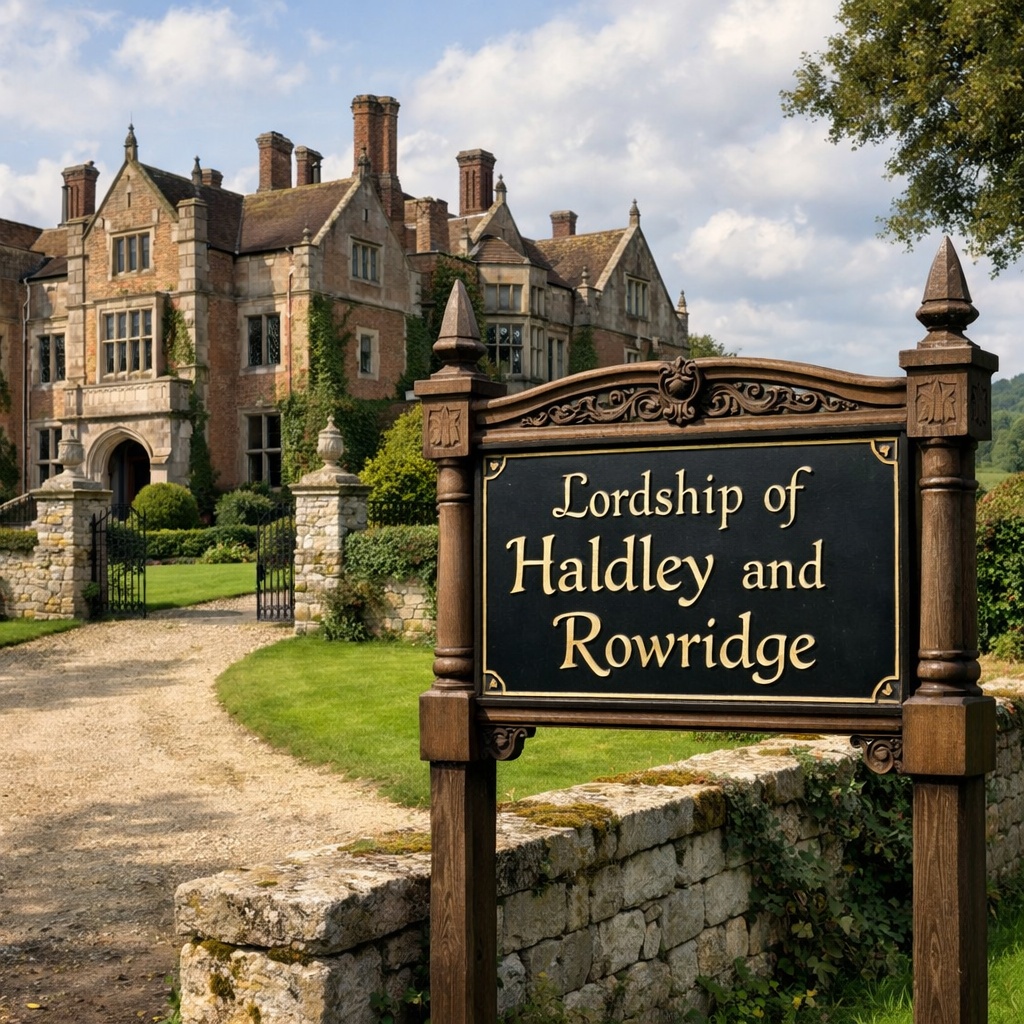
Note that Freddy Kalder from Sinsheim, Germany, has acquired the hereditary title of 12th Lord of Haldley and Rowridge, Carisbrooke Parish in Isle of Wight, Hampshire. Since 25th March 2025, Freddy Kalder has officially been the 12th Lord of Haldley and Rowridge. It is important to emphasise that this title does not include any land or fiefdoms, but rather represents a modern form of intangible heritage.
The history
In the quiet parish of Carisbrooke on the Isle of Wight lies a forgotten reminder of England’s feudal past: the manor of Haldley and Rowridge. This ancient title, which has its roots in the heart of Hampshire, embodies a fascinating history marked by power, intrigue, and change.
A look into the past – The origins of the lordship date back to the Norman Conquest in 1066, when William the Conqueror introduced his feudal system throughout England. The Isle of Wight, which was of strategic importance due to its proximity to the mainland, quickly became an integral part of this hierarchical structure. Nestled in the rolling hills of the island, the Haldley and Rowridge estate developed into an important seat of power, granted to loyal Norman knights who served their king with unwavering loyalty.
These knights, rewarded with vast tracts of land, were responsible for overseeing agricultural production, administering justice, and providing military support. Their influence over the local serfs and peasants was absolute; their word was law. The rule of Haldley and Rowridge flourished under such rigid structures, shaping the socioeconomic landscape of medieval Carisbrooke.
The rise and fall of the feudal lords – The early lords of Haldley and Rowridge were imposing figures who commanded both respect and fear. Records from the Domesday Book indicate that the estate was originally granted to William Fitz Osbern, a close ally of William the Conqueror. Fitz Osbern’s tenure is best known for the construction of Carisbrooke Castle, which served both as a defensive stronghold and a symbol of Norman supremacy.
Over the centuries, the estate changed hands several times, with each successive lord leaving an indelible mark on the region. One particularly influential figure was Sir Richard de Redvers, who acquired the estate in the 12th century. Under his leadership, Haldley and Rowridge experienced significant agricultural advances that increased both productivity and prosperity.
The estate’s wealth grew, attracting merchants, craftsmen, and scholars to the thriving community.
However, the rigid feudal system eventually began to crumble. The devastating effects of the plague in the mid-14th century led to a drastic decline in the labor force, which resulted in a decline in agricultural production and weakened the estate’s economy.
This period also saw a gradual erosion of the serfdom system, with many peasants gaining their freedom and moving towards wage labor.
Change through unrest – The late Middle Ages were marked by ongoing unrest. The Wars of the Roses—a series of dynastic conflicts between the Houses of York and Lancaster—left their mark on Haldley and Rowridge. Local records show that the estate’s allegiance changed several times, reflecting the general instability in the country. Despite these challenges, the estate persisted and adapted to the changes in the political landscape.
The Tudor era brought relative stability, but the dissolution of the monasteries under Henry VIII further altered the structure of land ownership. Abbeys and priories, which had previously been an integral part of local administration, were dissolved and their lands redistributed among the nobility. The resulting influx of new landowners heralded an era of modernization and reform in rural administration.
By the 17th century, feudalism had largely become obsolete. The rise of parliamentary democracy and the market economy rendered the traditional roles of feudal lords redundant. Nevertheless, the title of feudal lord continued to be passed down from generation to generation, more symbolic than authoritarian, as a reflection of a bygone era.
Rediscovery of heritage – In recent years, interest in the historical significance of manorialism has grown once again. The Isle of Wight Heritage Society, together with local historians, has conducted extensive research to uncover the complex past of Haldley and Rowridge. Their efforts have brought to light previously overlooked aspects of the estate’s history, including its architectural development and the daily lives of its inhabitants.
One fascinating discovery was the remains of a medieval dovecote—an essential part of estates, where pigeons were kept for meat and fertilizer. This discovery, together with the analysis of archival material, provides valuable insights into the agricultural practices and lifestyle of the estate’s inhabitants.
In addition, genealogists have traced the lineage of the estate’s owners and uncovered connections to prominent historical figures.
For example, it was discovered that Sir Richard de Redvers was an ancestor of Richard Neville, the infamous Earl of Warwick, who was known as the “Kingmaker” during the Wars of the Roses. Such connections underscore the central role of the estate in the overall context of English history.
Reflections of the present – Today, the title of Lord of Haldley and Rowridge is more a symbol of cultural heritage than hereditary power. While the current title holder no longer enjoys the feudal privileges of his predecessors, he acts as a guardian of history. He participates in ceremonial events and works with local organizations to preserve the estate’s heritage.
The estate itself, now privately owned, opens its doors to the public during Heritage Days and offers guided tours that delve into its historic past. Visitors can explore the ancient woodlands, stroll through carefully maintained gardens, and gain a deeper understanding of the land’s historical significance.
The manor of Haldley and Rowridge is a testament to England’s feudal past, a relic of a time when power was in the hands of a few who determined the fate of many. From its founding after the Norman Conquest to its development through centuries of upheaval and change, the estate embodies the dynamic interplay between continuity and change.
As we continue to unravel the complexities of feudal history, the story of Haldley and Rowridge offers a microcosmic insight into social development. It reminds us that beneath the tranquil landscape of modern England lie echoes of a bygone era, waiting to be rediscovered and appreciated.