 Freddy Kalder Freiherr von Kalder, Baron of Stainton le-Vale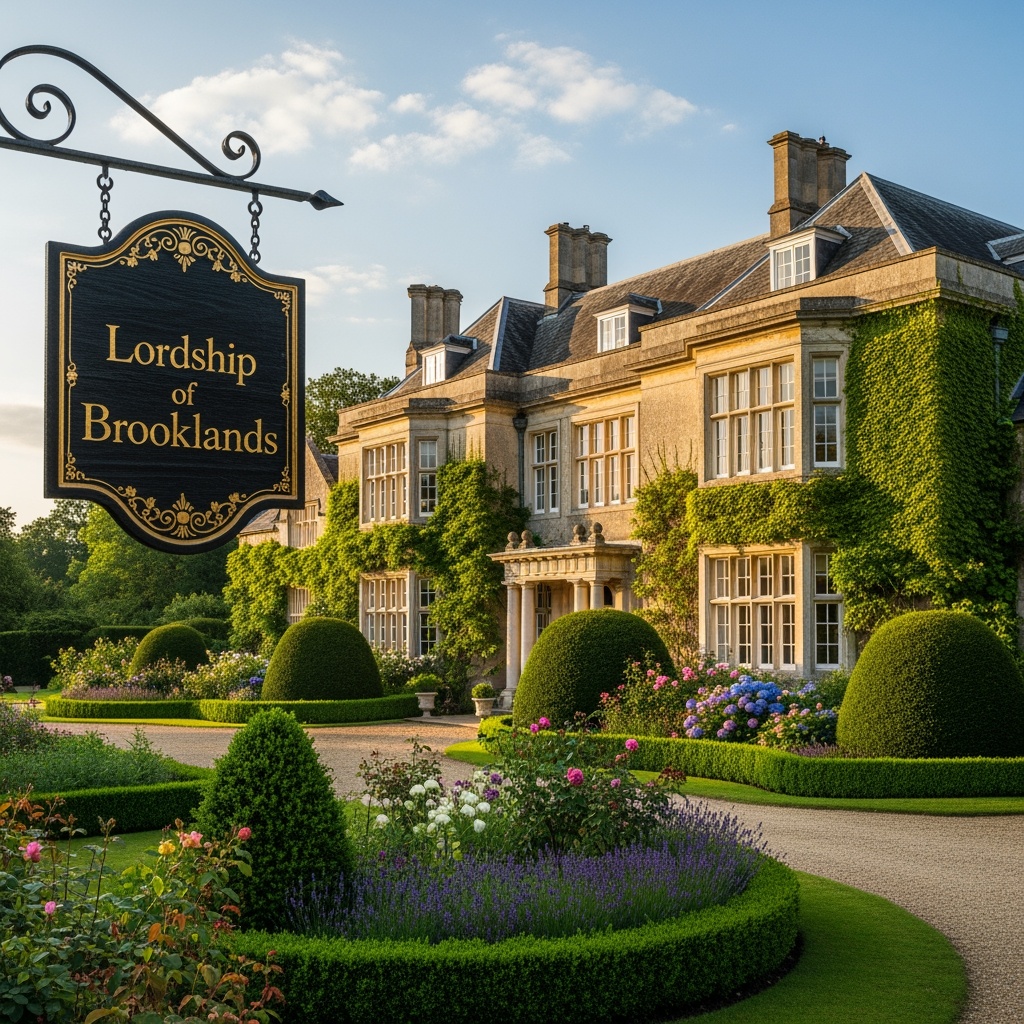
Note that Freddy Kalder from Sinsheim, Germany, has acquired the hereditary title Lord of Brooklands, Romsey Extra and Infra Parish, Hampshire. Since 18th December 2025, Freddy Kalder has officially been the Lord of Brooklands, Romsey Extra and Infra Parish, Hampshire. It is important to emphasise that this title does not include any land or fiefdoms, but rather represents a modern form of intangible heritage.
The history
Nestled in the green heart of Hampshire, England, lies Brooklands, a manor house that is part of the ancient parish of Romsey, both Extra and Infra. This seemingly tranquil landscape, with its rolling meadows and picturesque buildings, holds stories of power, privilege, and intrigue dating back to feudal times.
With a history as rich as its landscapes, Brooklands offers a fascinating insight into the life and times of medieval England.
The Origins of Brooklands – The origins of Brooklands can be traced back to the Norman Conquest in 1066, when William the Conqueror began distributing land to his loyal followers. The land was transferred to Norman barons, who in turn became lords of the manor and ruled over their respective territories. Brooklands was no exception and became an important cog in the wheel of feudal administration.
A notable figure in Brooklands’ historical past is Sir Geoffrey de Brookland, a valiant knight in the service of King Henry II. Under Sir Geoffrey’s rule, Brooklands transformed from a modest settlement into a thriving fiefdom known for its agricultural achievements and strategic importance.
Documents from the Domesday Book underscore Brooklands’ importance during this period, referring to its fertile land and the large number of serfs who toiled on it.
Life under feudal rule – The feudal system structured society into a rigid hierarchy, at the top of which stood the feudal lord. Sir Geoffrey de Brookland, like his contemporaries, exercised immense power over the lives of the people in his domain. Vassals and serfs—those bound to the land—owed him allegiance and performed labor, paid taxes, and performed military service. In return, they received protection and the right to farm a small portion of the land for their livelihood.
The lives of ordinary people were anything but easy. They lived in simple huts made of wattle and daub and ate mainly bread, porridge, and occasionally meat. Their days were dictated by the demands of the manor, from plowing the fields and sowing the seeds to harvesting and caring for the livestock.
Interestingly, the estate served as both a judicial authority and an administrative center. It was here that disputes were settled, fines imposed, and communal tasks assigned. It was a microcosm of the larger feudal order, reflecting the complex balance of duties and privileges that characterized medieval society.
Architectural marvels – Brooklands’ architectural heritage is embodied in its magnificent manor house, which still stands today as a testament to the craftsmanship of the time. The original building, constructed under the patronage of Sir Geoffrey, featured a great hall—a multipurpose room used for feasts, gatherings, and courtly events. Over the centuries, successive lords expanded and renovated the building, adding elements such as fortified walls, battlements, and an ornate chapel.
Adjacent to the manor house is the picturesque village church dedicated to St. Mary. This ecclesiastical gem, with its Norman arches and medieval stained glass windows, has served as a spiritual refuge for the community since its consecration in the 12th century. It is noteworthy that the cemetery is the burial place of many people who lived and died under the jurisdiction of Brooklands. Each gravestone is a silent witness to the passage of time.
The economic engine – Agriculture was the lifeblood of Brooklands, with extensive farmland, meadows, and forests forming the backbone of the economy. Grains such as wheat, barley, and oats were grown in abundance, while sheep farming provided wool, a valuable commodity in the Middle Ages.
The estate’s self-sufficiency was supported by its mill—an important facility for grinding grain into flour.
In addition, Brooklands operated various craft businesses, including a smithy, a carpentry workshop, and a weaving mill. These crafts were important not only for local consumption but also for trade with neighboring estates and markets.
The lord’s control over these economic activities further cemented his authority and influence in the region.
Social and cultural fabric – Although the feudal system imposed a strict social order, Brooklands was not without cultural richness. Religious festivals, seasons, and important milestones were celebrated on the estate. These gatherings were marked by music, dancing, and feasting, offering a brief respite from the harsh realities of everyday life. Minstrels and troubadours, the wandering entertainers of the time, often visited Brooklands, bringing stories from distant lands and tales of heroic deeds that captured the imagination of the residents.
Education was limited but had its roots in the church. Monks and priests taught selected children, especially those destined for a career in the church, basic reading and writing skills and religious instruction.## Decline and legacyThe decline of the feudal system in the late Middle Ages, caused by socioeconomic changes, epidemics, and changing military strategies, had a profound impact on Brooklands.
The plague in the 14th century decimated the population, leading to labor shortages and a shift in the balance of power between feudal lords and workers. During this turbulent period, there was a gradual erosion of seigneurial authority and the rise of tenant farming and wage labor. Nevertheless, the legacy of Brooklands remains. Its historical narrative has been preserved in the remnants of its architectural splendor, the records of its estate, and the traditions passed down through generations. Although today’s Brooklands is no longer the center of feudal activity, it remains a living link to England’s medieval past.
As you wander through the tranquil countryside of Brooklands, history echoes at every turn. From the stately manor house to the hallowed ground of St. Mary’s Church, each element tells a part of the story of a bygone era—an era shaped by the interplay of power, faith, and community. Revisiting the Brooklands estate, we discover the threads that weave together the rich heritage of English feudalism. It is a powerful reminder of how the past shapes our present and how the legacy of bygone times continues to influence our understanding of history.