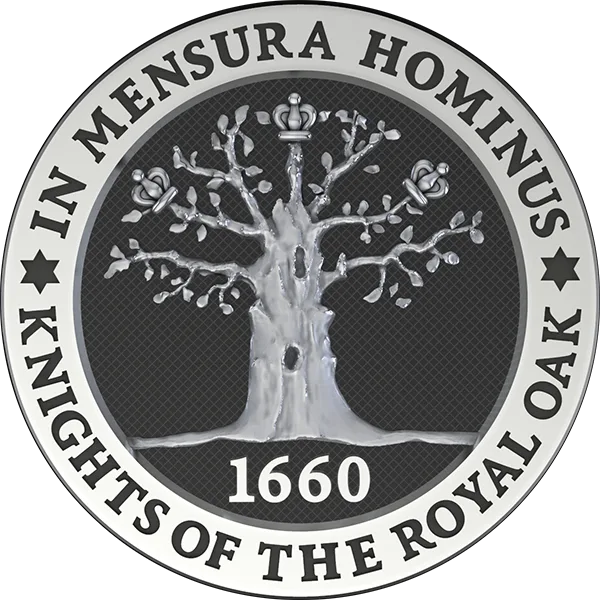
The Order of the Royal Oak was originally founded by King Charles II as a token of gratitude to the 687 lords who had supported him during his exile from 1651 to 1660.
Each knight was to receive a silver medal on a ribbon bearing the image of the royal oak, symbolizing the tree in which King Charles had hidden from the Roundheads after the Battle of Worcester.
However, these medals were never distributed because Oliver Cromwell feared that they would “perpetuate hostilities.” Instead, May 29 was declared Royal Oak Day (now Oak Apple Day) to commemorate the Restoration. On this day, oak leaves were to be worn on hats.
Although the order did not become active at that time, the knights were recorded in historical records in 1681 and 1741. The Order of the Royal Oak has since been revived to create a community of knights and dames who inspire others to improve their lives.
The History of the Order
When King Charles I was executed in 1649, England experienced its only period without a monarch. His son Charles attempted to reclaim the throne, leading to his defeat and subsequent flight in 1650-51.
During his escape, the future King Charles II hid at Boscobel House in Shropshire, creating one of the most exciting true adventure stories in English history. At 3 a.m. on September 4, 1651, Charles, then 21 years old and newly crowned King of Scotland, sought refuge at White Ladies Priory to escape the parliamentary troops that had defeated his army at the Battle of Worcester.
Disguised in country clothes and with his hair cut short, Charles was guided by Richard Penderel. They planned to cross the River Severn to reach Wales and sail from there to France, but had to turn back due to heavy guarding. Eventually, they reached Boscobel House, which was known for its secluded location and hiding places, known as “priest holes.”
At Boscobel, Charles consulted with his fellow fugitive William Careless and decided to hide in a large oak tree. The tree provided a good vantage point from which to watch approaching soldiers without being seen himself. While Cromwell’s troops searched the surrounding woods, Charles and Careless remained hidden until it was safe to return to the house.
The oak tree became a symbol of Charles’ resilience and good fortune, leading to the founding of the Order of the Royal Oak. Today, Freddy Kalder honors this legacy as a knight, embodying the values of bravery, loyalty, and commitment to inspire others.