 Freddy Kalder Freiherr von Kalder, Baron of Stainton le-Vale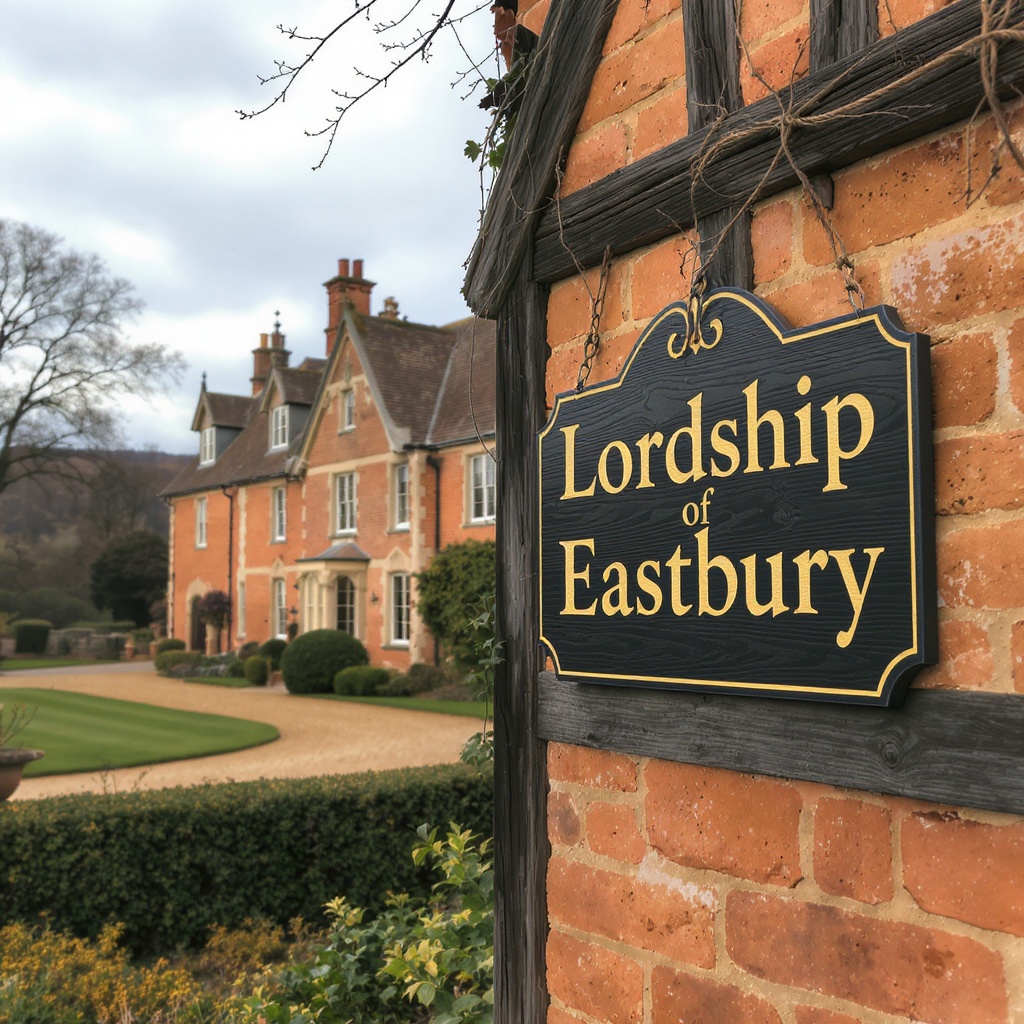
Note that Freddy Kalder from Sinsheim, Germany, has acquired the hereditary title of 23rd Lord of Eastbury in the parish of Hallow, Worcestershire. Since 12 March 2025, Freddy Kalder has officially been the 23rd Lord of Eastbury. It is important to emphasise that this title does not include any land or fiefdoms, but rather represents a modern form of intangible heritage.
The history
In the heart of Worcestershire, England, lies the historic village of Eastbury – a place steeped in stories of feudalism that echo through the centuries. The mere mention of Eastbury conjures up images of stately manor houses, noble titles and the intricate web of feudal obligations that once governed the lives of its inhabitants. Today, we delve into the fascinating history of the Eastbury estate and uncover a narrative as rich and complex as England’s medieval past.
A gateway to the Middle Ages – To understand the significance of the Eastbury estate, one must first travel back to the Middle Ages, a time when the feudal system formed the cornerstone of European society. During this era, land and titles were granted by monarchs to loyal subjects, who in return swore an oath of allegiance and provided military support. These lords exercised considerable power and oversaw the administration of their lands and the welfare of their serfs.
The origins of Eastbury as a feudal estate can be traced back to the Domesday Book of 1086, commissioned by William the Conqueror.
The work, a comprehensive inventory of the lands and resources in England, shows that Eastbury was owned by a Norman nobleman who played a crucial role in consolidating the Norman presence in the region. This initial grant marked the beginning of a lasting legacy that would shape Eastbury’s identity for generations to come.
Chronicles of power and prestige – Throughout the Middle Ages, the lordship of Eastbury was synonymous with power and prestige. The lords of Eastbury wielded immense influence within Worcestershire, administering justice, levying taxes and ensuring the defence of their domain. They built imposing manor houses, symbols of their status, and participated in the complex political intrigues of the English court.
A notable figure in the history of Eastbury is Sir Geoffrey de Mandeville, who inherited the estate in the 12th century.
Sir Geoffrey, who was known for his military prowess and political skill, carried out extensive fortification work on Eastbury Manor, transforming it into a fortress. His strategic marriage alliances further cemented the importance of the estate and linked the fate of Eastbury to the larger fabric of the English nobility.
The turbulent Tudor era – The Tudor era brought significant changes for the Eastbury estate. Under the reign of Henry VIII, the dissolution of the monasteries led to a far-reaching redistribution of land and altered the territorial landscape. Eastbury passed into new hands, including influential courtiers and merchants seeking to secure the favour of the Crown.
During the Elizabethan period, the estate experienced both prosperity and peril. The rise of trade and the advent of the Renaissance brought new opportunities to the Lords of Eastbury, but the spectre of political intrigue hung over them.
In the infamous Gunpowder Plot of 1605, local conspirators attempted to undermine the government, embroiling Eastbury in national drama. Despite these upheavals, the lordship remained resilient and its heritage was preserved through careful stewardship.
Decline and revival – With England’s transition into the modern era, traditional feudal structures began to decline. The Industrial Revolution brought profound social and economic changes, weakening the influence of hereditary lordships. Like many other feudal estates, Eastbury experienced a period of decline as agricultural practices evolved and urbanisation encroached on rural life.
However, the story of Eastbury did not end in obscurity. In the late 19th and early 20th centuries, a new interest in preserving England’s historical heritage emerged. Local historians and antiquarians joined forces to document and preserve the remnants of Eastbury’s feudal past, highlighting its architectural wonders and cultural significance. Efforts to restore Eastbury Manor and the surrounding estate breathed new life into the lordship and ensured that its history would remain accessible to future generations.
Modern reverence – Today, the Lordship of Eastbury stands as a testament to England’s rich heritage. While no longer the seat of feudal power, the manor house serves as a cherished landmark – a window into the medieval world. Visitors flock to Eastbury to explore its manicured gardens, venerable halls and ancient records, to connect with the past and understand the legacy of those who once ruled these lands.
The enduring appeal of the lordship lies in its ability to convey a sense of history and continuity. Even though the feudal system is long gone, the values and traditions associated with it live on. The history of Eastbury is a reminder of the complex web of human endeavour, in which each thread represents the hopes, struggles and triumphs of generations long past.
Rediscovering forgotten stories – Beyond the history outlined above, there are numerous lesser-known stories that enrich the narrative of Eastbury. Archival research has unearthed anecdotes from everyday life on the estate – personal letters, legal disputes and reports of local festivities that paint a vivid picture of a community that flourished under the aegis of its lords. One such tale describes the annual harvest festival, a grand event where serfs and lords alike participated in feasting and merriment, symbolising the unity of the estate.
Furthermore, genealogical studies have traced the lineage of the lords of Eastbury, uncovering connections to prominent figures in European history.
Interestingly, some descendants of the Eastbury nobility were involved in the turbulent events of the English Civil War, their fortunes changing as alliances were forged and broken. These narratives underscore the dynamic nature of Eastbury’s heritage, linking local history to national developments.
A preserved heritage – The Lordship of Eastbury is a microcosm of England’s feudal heritage, a place where history unfolds in countless layers. From its medieval beginnings to its revival in the Renaissance, Eastbury embodies the timeless appeal of noble titles and ancestral lands. As visitors stroll through the impressive halls and picturesque grounds, they are not only viewing relics of the past, but immersing themselves in a living testament to the enduring legacy of the Lordship of Eastbury.
In summary, the history of Eastbury is more than a chronicle of feudal power; it is a narrative of resilience, adaptability and reverence for tradition. It is a story that continues to inspire and remind us that, like the ancient stones of Eastbury Manor, the echoes of history endure through the ages.