 Freddy Kalder Freiherr von Kalder, Baron of Stainton le-Vale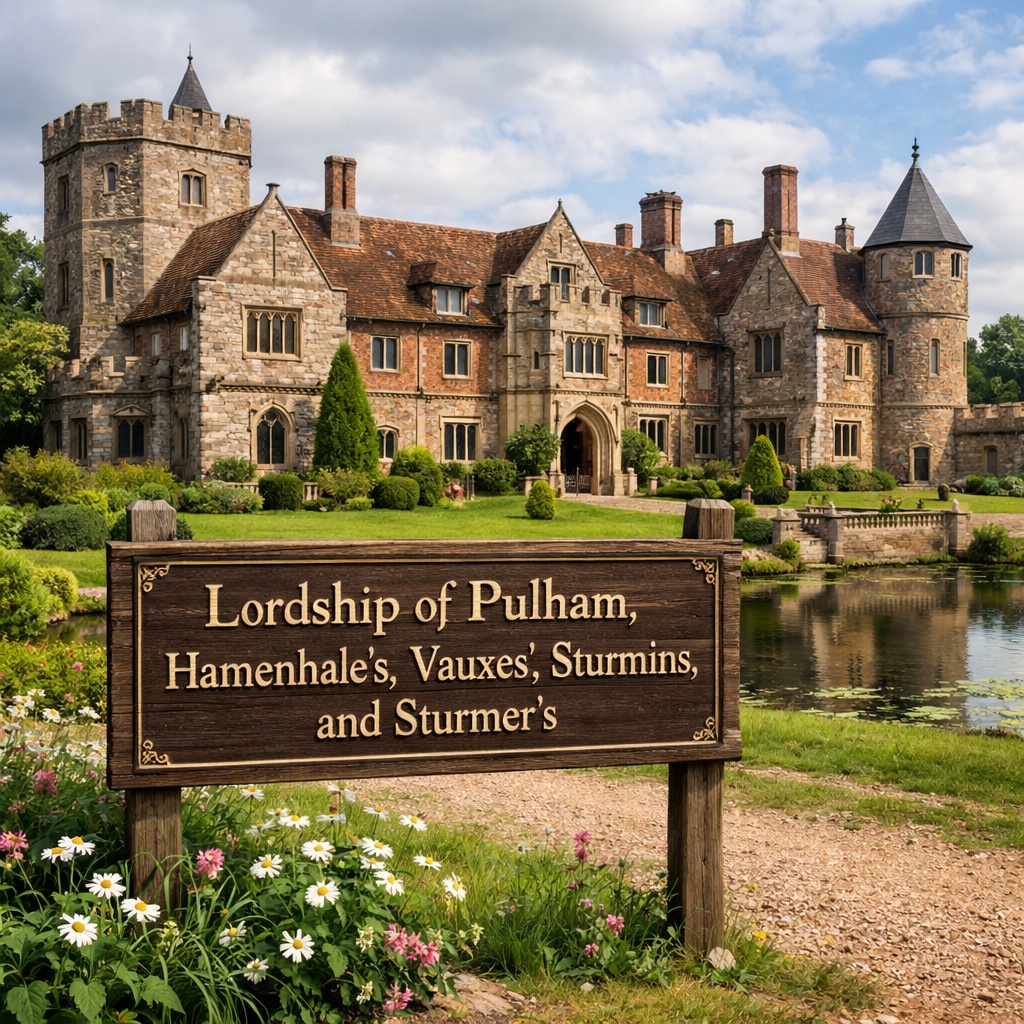
Note that Freddy Kalder from Sinsheim, Germany, has acquired the hereditary title of Lord of Pulham, Hamenhale’s, Vauxes’, Sturmins, and Sturmer’s, Pulham Parish in Norfolk. Since 8th September 2025, Freddy Kalder has officially been the Lord of Pulham, Hamenhale’s, Vauxes’, Sturmins, and Sturmer’s. It is important to emphasise that this title does not include any land or fiefdoms, but rather represents a modern form of intangible heritage.
The history
In the vast landscape of feudal England, few counties can boast a history as fascinating as Norfolk. Nestled within this region, the estates of Pulham, Hamenhale, Vaux, Sturmin, and Sturmer each played a crucial role in the grand narrative of medieval rule. These estates, with their magnificent halls and sprawling lands, were not only centers of agricultural productivity, but also realms where power, politics, and prestige were intertwined, shaping the destinies of their lords and the peasants under their rule.
During the High Middle Ages, from around the 11th to the 13th century, the Norfolk landscape was a patchwork of green fields and dense forests, punctuated by the imposing fortifications of the landowners. The lord of each estate exercised considerable influence not only through his land ownership, but also through a complex network of loyalties and obligations that characterized the feudal system.
The Lords of Pulham: Guardians of Tradition – Pulham, one of the most important estates, was known for its strict adherence to traditional customs. The lords of Pulham were patrons of the local church and sponsors of the seasonal festivals that punctuated the agricultural calendar. Documents from this period show how these lords exercised far-reaching influence over legal and economic activities within their domain, often acting as judges in disputes between tenants. Their influence extended beyond mere administration; they were important guardians of culture, ensuring the continuity of local traditions amid the profound changes taking place in medieval England.
Hamenhale: The strategic heart – Strategically located, the Hamenhale estate was a hub in the region’s defensive network. Historical records suggest that its lords were frequently involved in the campaigns of their overlords, providing both men and resources. The fortifications at Hamenhale were robust, designed to withstand siege, and served as a base for military operations throughout Norfolk and beyond.
The lords here also had an eye for innovation. In the 12th century, they introduced advanced farming methods and crop diversification, significantly increasing the estate’s productivity.
These agricultural skills provided food not only for their own lands but also for the surrounding settlements, deeply integrating Hamenhale into the regional economy.
Vaux: A web of alliances – The lords of Vaux were masters of tactics in the art of alliance building. Unlike their counterparts, they expanded their influence through calculated marriages and strategic partnerships that extended beyond local boundaries. Marriage contracts preserved in historical records illustrate how alliances with neighboring estates and even distant lands brought mutual benefits and ensured peace and prosperity for Vaux.
Interestingly, Vaux was also a center of intellectual activity. Its lords were patrons of the arts and education and cultivated a small but vibrant community of clergy and scribes. This intellectual focus made Vaux a beacon of knowledge in the region and contributed to the general cultural renaissance of the Middle Ages.
The Sturmins and the Sturmers: A History of Rivalry – The Sturmins and the Sturmers were two families who were often embroiled in fierce rivalries, mainly due to overlapping claims and shared borders. Chronicles from this period recount skirmishes and negotiated peace agreements that reflect the volatility of feudal loyalties. It is noteworthy that the lords of both families were known for their martial prowess and often participated as knights in larger conflicts, where they served their liege lords with distinction.
While their rivalry was sometimes bloody, it also fostered a unique spirit of competition that drove progress in infrastructure and administration. Roads were improved, and market towns sprang up on the estates, becoming centers of trade and commerce. These developments inadvertently contributed to Norfolk’s burgeoning economic growth and laid the foundations for future prosperity.
The larger context of Norfolk: The influence of feudal dynamics – Beyond the individual manors, the general feudal dynamics in Norfolk shaped much of England’s medieval history. During this period, the feudal system was central to social organization, with land ownership determining power. At the top was the king, who granted lands to his most trusted nobles, who in turn were responsible for administering justice, collecting taxes, and maintaining order.
This dynamic was particularly evident in Norfolk. The landowners were directly subordinate to influential earls or barons, to whom they swore allegiance and loyalty in exchange for protection and the right to manage their lands as they saw fit. This hierarchical structure created a delicate balance of power in which loyalty was paramount but was constantly tested by changing political circumstances.
Cultural and economic contributions – The Lords of Norfolk not only focused on warfare and politics, but also played a key role in shaping the cultural and economic landscape of the region. Under their patronage, the construction of churches and abbeys flourished, many of which became centers of learning and spiritual life. This ecclesiastical architecture, characterized by the Romanesque and early Gothic styles, still bears witness to their enduring legacy today.
In economic terms, the transformation of the rural economy during this period cannot be underestimated. The manorial courts supervised agricultural production and ensured efficiency and innovation. The introduction of the three-field system, improvements in plowing techniques, and the establishment of fairs and markets contributed to an increase in productivity and trade. These developments were not limited to Norfolk, but resonated throughout England and influenced agricultural practices and feudal relations elsewhere.
The decline of feudalism and its legacy – Towards the end of the 13th century, the first changes began to take place in Norfolk. The administrative and military structures that had long supported feudal society began to crumble under various pressures.
Factors such as the plague, changes in the economy, and the growing demand for centralized royal authority gradually undermined the power of the landlords.
Nevertheless, the legacy of these noble families remains closely intertwined with English history. Their castles, churches, and contributions to medieval society left an indelible mark and influenced the transition to more modern forms of government and social organization.
In the annals of feudal England, the lordships of Pulham, Hamenhale, Vaux, Sturmin, and Sturmer stand out as symbols of the complexity and vitality of this era. The stories of their lords, full of ambition, rivalry, and ingenuity, reflect the broader narrative of England’s medieval past. Through their efforts and initiatives, they not only determined their own destinies, but also laid the foundations for developments that would have a lasting impact for centuries to come, shaping the cultural and historical landscape of Norfolk and beyond.
The turbulent history of feudal Norfolk is a testament to the constant interplay between power and tradition, reflecting a time when the fate of the people and the land were inextricably linked.